100 Grams: Common Things That Weigh 100 Grams 2026
100 grams is a measurement you’ll encounter in cooking, fitness, and shipping. But what does it actually feel like?
This guide shows you exactly what 100 grams weighs using everyday objects you already know—from your smartphone to a cup of sugar. We’ll cover exact conversions, easy estimation methods, and practical applications so you never have to guess again.
How Much Is 100 Grams?
100 grams is a modest weight—light enough to hold in your palm, but noticeable enough that you’d feel it. In the metric system, it’s one-tenth of a kilogram, making it a common measurement in cooking, nutrition labels, and international commerce.
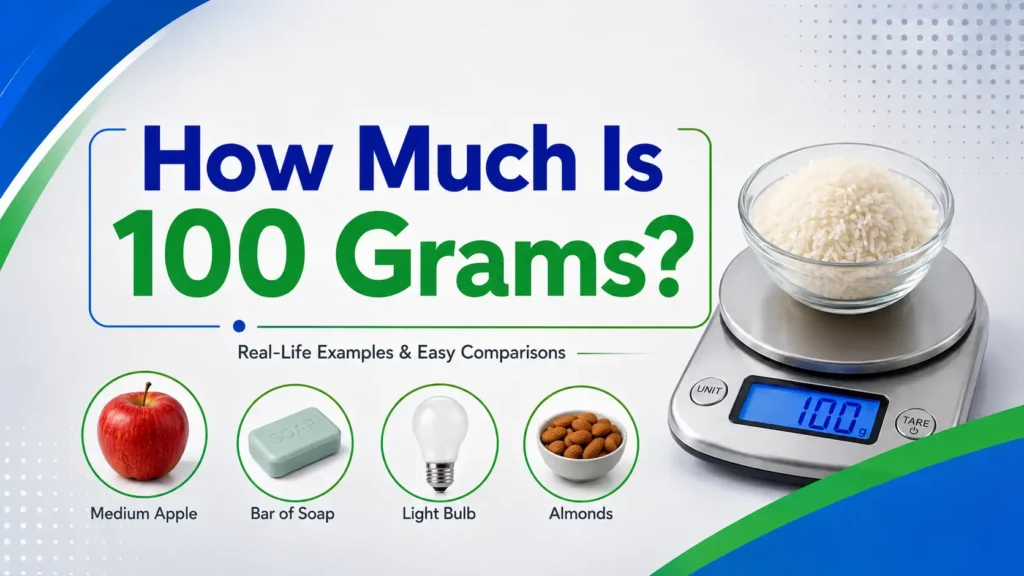
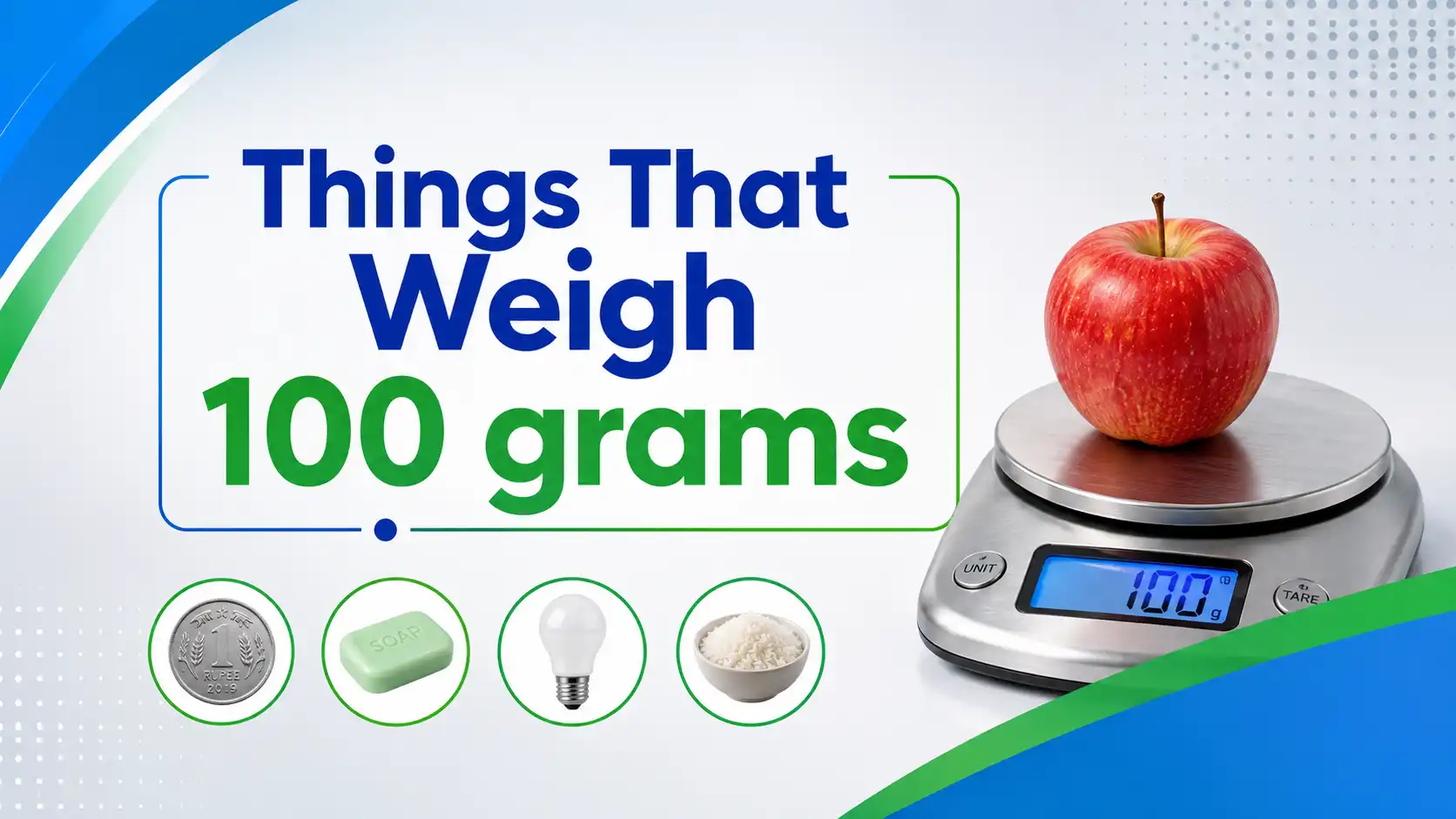
To put it in perspective: 100 grams is roughly equivalent to 3.5 ounces or about a quarter-pound. It’s the weight of a medium apple, a deck of playing cards, or a large egg.
If you’ve ever held a smartphone, you’ve held something close to 100 grams—most modern phones weigh between 150-200 grams, so 100g is noticeably lighter.
What Does 100 Grams Feel Like?
When you hold 100 grams, it should feel light and easy to manage. It’s not so light that it disappears in your hand, but it’s not heavy either. If you’ve ever:
- Held a playing card: Stack about 30-40 cards, and you’re at 100 grams
- Held a pencil: You could hold about 40 standard pencils
- Held a smartphone: It weighs about as much as half a modern flagship phone
The key takeaway: 100 grams is light but tangible. It’s the weight of something you’d notice in a shopping bag but could comfortably carry in your pocket (if not bulky).
Object Summary Table
| # | Object | Verified Weight | vs 100 Grams | Category |
|---|---|---|---|---|
| 1 | Medium apple | 100-150g | Nearly identical | Food |
| 2 | Deck of playing cards | 90-100g | Almost identical | Household |
| 3 | iPhone 15 | 171g | About 1.7x heavier | Electronics |
| 4 | Smartphone battery | 40-60g | Lighter | Electronics |
| 5 | Quarter cup flour | ~30g | Lighter | Food |
| 6 | 2 golf balls | ~93g | Nearly identical | Sports |
| 7 | Pencil | ~5g each | Would need 20 | School |
| 8 | AA battery | ~23g | Would need 4-5 | Household |
| 9 | Sheet of paper (100 sheets) | ~500g | Would need 1/5 | Office |
| 10 | Granola bar | ~35-50g | Lighter | Food |
Medium Apple
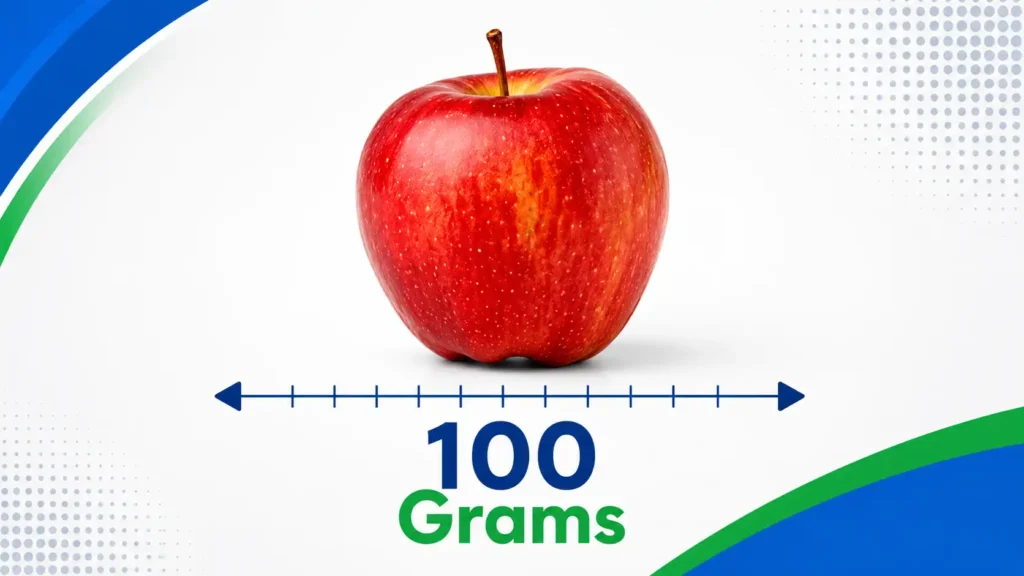
An average medium apple (Gala, Fuji, or Honeycrisp variety) weighs approximately 100-150 grams, with 100 grams being on the lighter side of that range. This is one of the most relatable comparisons because most people interact with apples regularly.
If you grab an apple from a grocery store that feels light but not tiny, you’re likely holding close to 100 grams. This comparison is useful because it provides both weight and visual reference—you can immediately picture the size and heft together.
Deck of Playing Cards
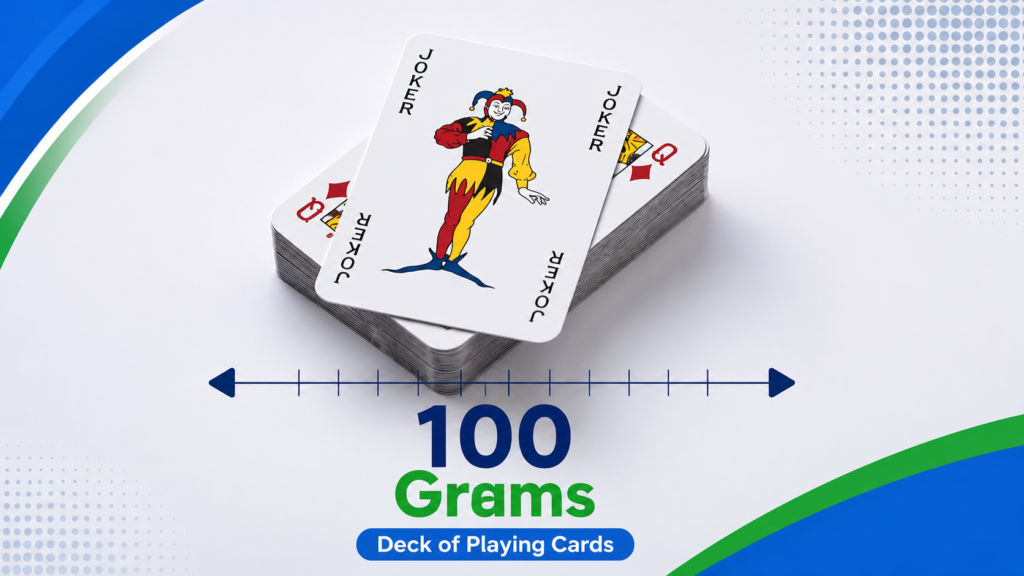
A standard deck of 52 playing cards (ISO standard poker-sized) weighs approximately 90-100 grams depending on paper quality. This is nearly a perfect 100g match, making it an excellent reference point.
The deck is also compact, so it gives readers a sense of both weight and volume. You can actually hold a deck of cards and get an accurate feel for what 100 grams feels like without needing a scale.
Smartphone Battery (Approximate)
Most modern smartphone batteries weigh between 40-80 grams depending on capacity. A high-capacity battery (4000+ mAh) lands around 60-80 grams. So 100 grams would be roughly 1.25-2.5 times heavier than a smartphone battery.
This comparison is useful for people familiar with phone internals or those curious about component weights.
Two Golf Balls
A regulation golf ball (per USGA standards) weighs a minimum of 45.93 grams (1.62 ounces). Two golf balls weigh approximately 92-95 grams, making this very close to 100 grams.
This comparison appeals to golfers and sports enthusiasts, and it provides a concrete sense of weight if you’ve ever held golf balls in your hands.
AA Battery
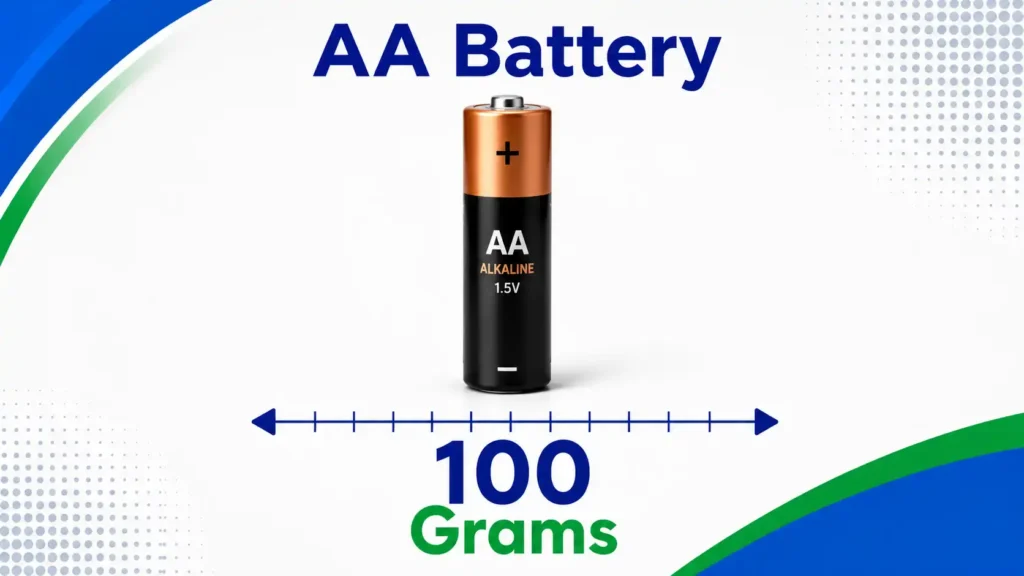
A standard AA alkaline battery weighs approximately 23 grams. Therefore, you’d need about 4-5 AA batteries to reach 100 grams.
This comparison is useful for people who understand battery weight from changing batteries in remote controls or flashlights. It shows the relationship between a small, familiar object and the target weight.
Quarter Cup of All-Purpose Flour
A quarter cup (60 ml) of all-purpose flour weighs approximately 30 grams. So 100 grams of flour would fill roughly a third to half cup.
This is one of the most practical comparisons for cooking and baking, where weight matters but many home cooks still use volume measurements. Knowing that 100 grams of flour is about 1/3 cup helps bridge the gap between metric and imperial measurements in recipes.
Sheet of Paper (100 sheets)
A single sheet of standard 8.5″ × 11″ copy paper (20 lb bond) weighs approximately 5 grams. A ream of 500 sheets weighs 2,500 grams, so 100 sheets would weigh 500 grams.
Wait—that means 20 sheets of paper weighs 100 grams. Most people have paper nearby, so this is a quick mental check: grab a stack of about 20 sheets from your printer, and you’ve got 100 grams.
Granola Bar
A typical granola bar (Quaker, Nature Valley, or Clif Bar variety) weighs between 35-50 grams. So 100 grams would be roughly 2-3 granola bars.
This comparison is useful for fitness enthusiasts and snackers because granola bars are a common portable food with labeled weights. It also helps contextualize 100 grams in terms of typical snack portions.
Large Egg (in-shell)
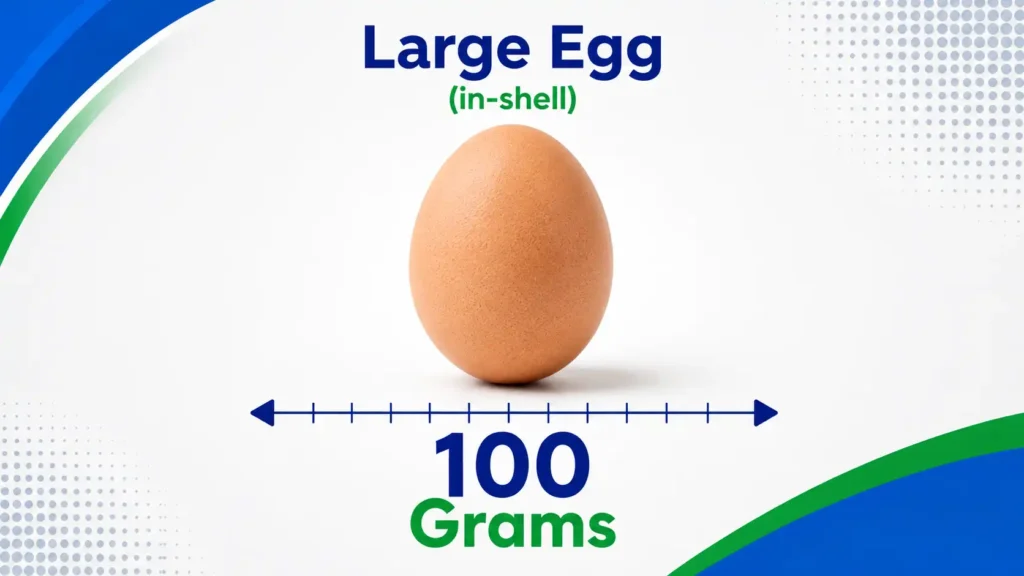
A large egg (USDA Grade A) weighs approximately 50 grams. So 100 grams equals two large eggs. This is extremely useful for cooking and baking comparisons, where eggs are a fundamental ingredient. Most cooks are familiar with egg weight, making this a natural reference point.
How to Estimate 100 Grams Without a Scale (4 Methods)
Method 1: The Deck of Cards Test
Grab a standard deck of playing cards (52 cards). If it feels light but noticeable, you’re holding approximately 100 grams. This is the most accurate hand-based method because card decks are standardized to a very narrow weight range. You can verify this at home against any kitchen scale.
Accuracy: ±5 grams
Best for: Quick checks, anyone with cards nearby
Method 2: The Two-Handed Feel
Hold an object in one hand and try to estimate. 100 grams should feel:
- Light enough to hold comfortably for minutes without fatigue
- Heavy enough to notice; not feather-light
- Roughly the weight of a medium apple or smartphone battery
If you have experience with dumbbells or weights, 100 grams is about the weight of a single large plate on a standard barbell.
Accuracy: ±20 grams (depends on experience)
Best for: General awareness; developing intuition
Method 3: The Apple/Banana Comparison
Pick a medium apple or banana from your kitchen. If it feels medium-sized (not huge, not tiny), it’s probably 90-150 grams, with 100 being typical. Bananas are slightly less precise than apples (they vary more), but they’re still useful for quick estimation.
Accuracy: ±15 grams
Best for: Home/kitchen use; universally available
Method 4: The Water Displacement Method (If You Have a Scale)
If you have a kitchen scale but it’s not working properly, fill a small cup with water and place it on the scale. Record the weight of water + cup. Then add your object and take a new reading. The difference is your object’s weight. Water weighs 1 gram per milliliter, so 100 grams of water = 100 milliliters.
Accuracy: Exact (if scale works)
Best for: Verification; when you need precision
⚠️ Disclaimer: Hand-based estimation methods vary by individual hand size, weight distribution, and personal experience. For cooking, medication, or situations requiring precision, always use a kitchen scale or follow labeled weights.
Practical Uses for Understanding 100 Grams
Cooking & Baking
Most recipes (especially international or professional recipes) use grams for precision. Knowing what 100 grams of different ingredients looks like helps you eyeball portions when a scale isn’t available. Common 100g-or-near-it ingredients: flour (~130ml), sugar (~200ml), butter (~100g exact), rice (~185ml).
Fitness & Nutrition
Nutrition labels often reference grams (especially protein, carbs, and fats). If a nutrition label says “100 grams of this food has 50g protein,” you need to understand what 100 grams looks like to portion correctly. For example, 100 grams of chicken breast is roughly one medium piece or one palm-sized portion.
Shipping & Postage
USPS, UPS, and DHL use grams for weight-based shipping rates. Letters under 100 grams qualify for standard rates; items over 100 grams incur additional fees. This directly impacts mailing costs for small packages.
Online Shopping & Product Comparisons
Product listings often show weight for comparison. Understanding 100 grams helps you assess whether a product will feel substantial or flimsy before purchasing.
Fitness Tracking
Bodyweight exercises and dumbbells sometimes come in 100g increments. Knowing the heft helps with form and difficulty assessment.
Nearby Weight Comparison
| Measurement | Grams | Tactile Difference |
|---|---|---|
| 90 grams | 90g | Noticeably lighter; more delicate |
| 100 grams | 100g | Target weight |
| 110 grams | 110g | Slightly heavier; more substantial feel |
| 150 grams | 150g | Clearly heavier; noticeable difference |
Explanation: The difference between 90g and 100g is perceptible but subtle—about 3.5 ounces vs. 3.3 ounces. Most people can feel a 10-gram difference when holding an object, especially if they know what they’re comparing. This matters for precision work like dosing supplements or comparing product weights.
Also find: How Long Is 1 Inch? Exact Size & Real-Life Comparisons
Measurement Tips
- Use a digital kitchen scale for best accuracy (±1-2g)
- Place scale on a flat surface before measuring
- Tare the scale to zero before adding your object
- Avoid glass or uneven surfaces that can affect readings
- For food, account for packaging: Weigh just the food, not the container
- Check scale calibration regularly (many have calibration weights)
- For precision work, measure twice to verify
Conclusion
100 grams is a practical measurement you’ll encounter in cooking, fitness, shipping, and daily life. It’s light enough to hold easily but substantial enough to notice—roughly the weight of a medium apple, a deck of cards, or half a smartphone.
With this guide’s comparisons and estimation methods, you can confidently estimate 100 grams anywhere, anytime. Whether you’re following a recipe, shipping a package, or tracking nutrition, understanding 100 grams makes precision accessible. Explore more weight comparisons in our measurement guides.
FAQs
How much is 100 grams in ounces?
100 grams equals 3.527 ounces (often rounded to 3.5 oz). To convert: grams ÷ 28.3495 = ounces.
What household items weigh about 100 grams?
Common 100g items include: a medium apple, deck of playing cards, large egg (doubled), granola bar (tripled), and about 20 sheets of paper.
How do I estimate 100 grams without a kitchen scale?
Hold a deck of cards (~100g exact), a medium apple, or two golf balls. These provide accurate tactile reference points without needing equipment.
Is 100 grams considered light or heavy?
100 grams is light—easily held in one hand—but substantial enough to notice. It’s neither feathery nor hefty; it’s a comfortable middle ground.
How many cups is 100 grams of flour?
Approximately 1/3 to 1/2 cup (0.75 cups / 180 ml), depending on how tightly packed. Exact conversion: 100g flour ÷ 125g per cup = 0.8 cups.
Can I use a bathroom scale to measure 100 grams?
No—bathroom scales typically measure in 1-pound increments (454g) and aren’t precise enough for grams. Use a kitchen scale for accuracy.
How much does 100 grams of water weigh?
Water weighs exactly 1 gram per milliliter, so 100 grams of water = 100 milliliters of water. This is useful for volume-to-weight conversions.
Why is 100 grams commonly used in recipes?
Because 100g is easy to calculate percentages (baker’s percentages), it’s metric-standard internationally, and it’s precise without being overly complicated like milligrams.